

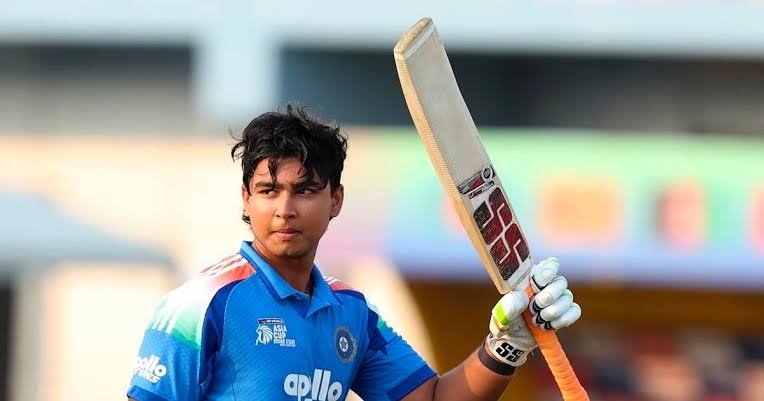
On October 24, 2026, Vaibhav Sooryavanshi batted at No. 3 for the first time in his international career during the second T20I between India and New Zealand at Hagley Oval in Christchurch. The 15-year-old, who was born on March 27, 2011, was inserted into the playing XI as a replacement for the injured Ishan Kishan. The team management assigned him a position one position below his usual opening position.
Vaibhav Sooryavanshi tenure at the wicket was brief, lasting only eight deliveries. Nathan Smith dismissed him after he was caught at cover, resulting in questions about whether the No. 3 slot is the appropriate fit for him at this juncture of his career. He only managed four runs.
The decision was made in light of India’s impressive start to the series. India achieved a record 226-run chase against New Zealand in the first T20I at the same venue on October 23, 2026. Abhishek Sharma and Sanju Samson formed a 93-run partnership during the powerplay. It is possible that the team management was hesitant to disrupt the successful opening combination, which is why Sooryavanshi was relegated to the third position rather than opening alongside Abhishek.
What was the reason for Vaibhav Sooryavanshi relocation to No. 3?
The decision to place Sooryavanshi at No. 3 appears to be primarily motivated by the 93-run powerplay stand between Abhishek Sharma and Sanju Samson in the first T20I. The team management elected to maintain the opening pair’s match-winning performance and instead inserted Sooryavanshi lower in the order following Kishan’s injury, which necessitated a change to the XI.
Samson, Abhishek, and Sooryavanshi were last included in the same playing XI at the Asian Games in 2026. This is a noteworthy fact. During that campaign, Sooryavanshi and Abhishek were the opening pair, while Samson occupied the third position. VVS Laxman served as the stand-in head coach. The present batting structure, as implemented by the team, is a significant departure from the previous one.
Is it advisable for Vaibhav Sooryavanshi to maintain his position at No. 3 in the future?
The No. 3 position is well-suited to Samson. In particular, the wicketkeeper-batsman has spent a substantial amount of his IPL career, notably with Rajasthan Royals, batting in that position. He has the ability to rotate between the strike and attack depending on the circumstances of the match. His extensive international cricket experience provides him with the adaptability necessary for the No. 3 position.
In contrast, Vaibhav Sooryavanshi has demonstrated his most effective performance when operating at the top of the order, a position that is well-known to him. He was the Player of the Series during the T20I tour of Zimbabwe.
Vaibhav Sooryavanshi ball-striking ability has the potential to turn the tide of a game within a few overs when he is in top form. The quality is most effectively utilized at the top of the order, as opposed to at No. 3, where a batter frequently must assess the situation left by the openers before committing to a cadence. Sooryavanshi’s game will expand as he continues to play at the highest level of cricket; however, his most productive position is currently as an opener.

Neha Kapoor is a dedicated sports writer covering cricket news, player stories, tournaments, and trending developments. She enjoys turning important cricket moments into engaging stories that are informative, concise, and easy for fans to follow.
Expertise: Cricket Stories • Player News • Tournament Updates • Trending Cricket News