

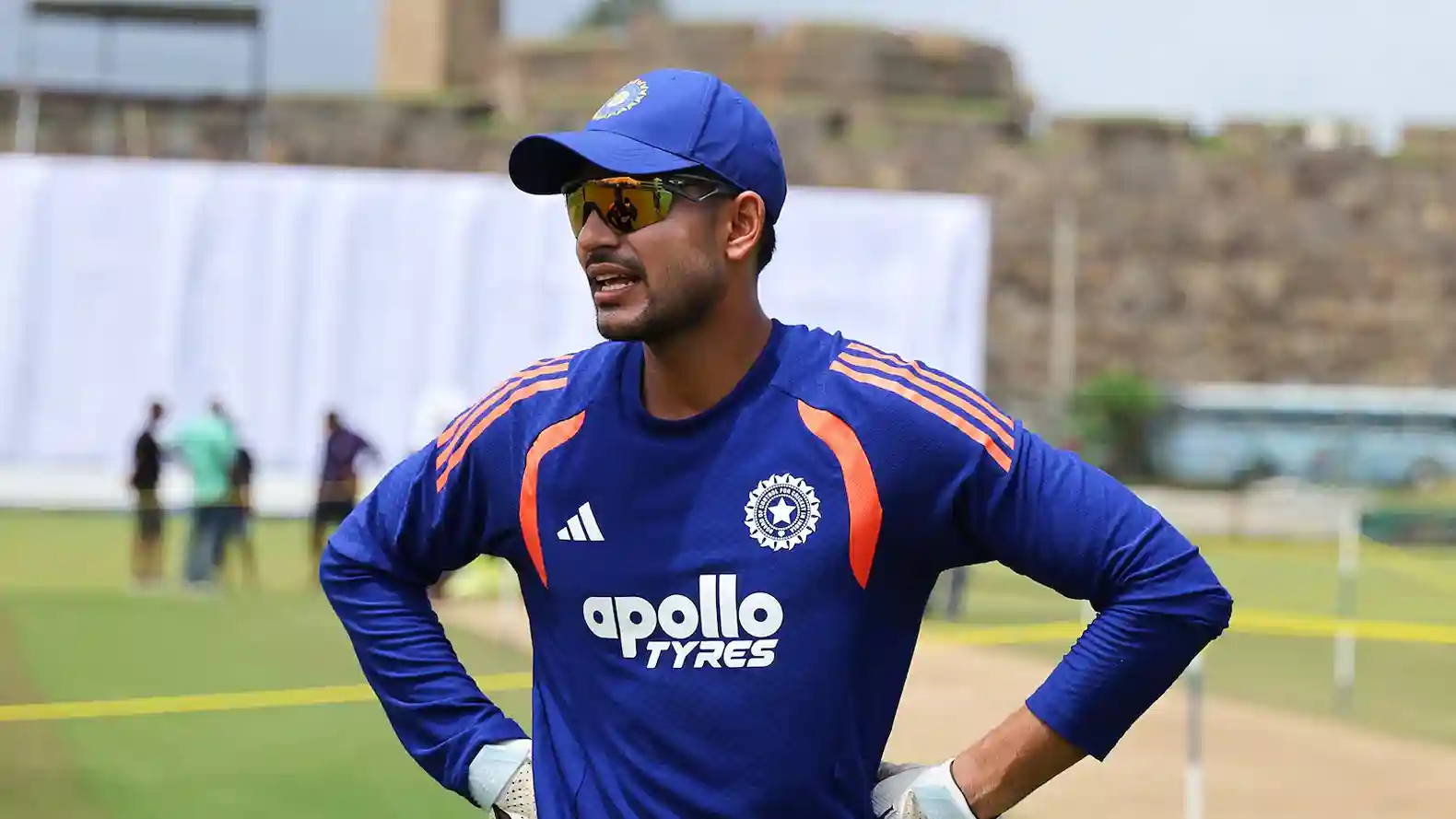
Shubman Gill, the captain of the Indian team, acknowledged that there are still areas in which they can improve in ODI cricket, despite the fact that they won the series against the West Indies. He specifically identified their fielding and death-bowling implementation as concerns prior to the 2027 World Cup.
Shubman Gill was awarded the distinction of Player of the Series for his 334 runs, which included an undefeated double-century in a victorious chase of 406. Nevertheless, he was dismissed early in the final match of the day after he edged a ball from Jayden Seales to Shai Hope, who dived full stretch to his left to make a one-handed catch.
Shubman Gill acknowledged his disappointment during the post-match presentation, stating, “I mean, you’re always disappointed whenever you get out early, but I don’t think there could have been much that I could have done on that ball.” He also acknowledged that there was not much he could have done about that specific delivery.
Despite the series’ outcome, Shubman Gill was candid about the team’s deficiencies, identifying the team’s fielding as an area that necessitated improvement in the forthcoming games.
What was Shubman Gill’s assessment of the clarity of India’s death bowling?
Shubman Gill’s primary concern regarding death bowling was the team’s lack of clarity regarding field placements and bowling intent following the opposition’s loss of multiple wickets. He identified it as a persistent issue in one-day cricket that India must resolve before the 2027 World Cup.
The slow over-rate in the final game exacerbated the bowling difficulties. Following the 46th over, India was penalised and was compelled to bowl the final deliveries with only four fielders on the boundary, as opposed to the norm of five. Gill acknowledged that this had an impact on the outcome.
In what manner did India explore the potential of bowling during this series?
Hardik Pandya was unavailable for the duration of the series due to injury, while Jasprit Bumrah was serving at the Asian Games. Coach Gautam Gambhir recognised the limited number of ODI matches remaining until the 2027 World Cup, and the team’s XI selections demonstrated a clear intention to investigate and enhance bowling options in addition to winning matches.
Despite his participation in only one of the three games, Mohammed Siraj did not bowl in the final overs of that match. Offspinner Naman Dhir, newcomer Anshul Kamboj, and Gurnoor Brar all bowled in the final 10 overs at New Chandigarh. Auqib Nabi, a debutant, contributed to the conclusion of the innings in a match in Guwahati, where 405 was chased down to 406. The bowlers of both teams were subjected to constant strain in conditions that offered minimal support.
Also Read : Ali Khan Back in USA ODI Squad After Three-Year Gap
In the final encounter on Saturday, India elected to bat first and overcame a 4 for 2 deficit to achieve 351. Gill stated that he was satisfied with the total, despite the fact that the slow over-rate penalty and the fielding errors throughout the series underscored the need for further work before the championship next year.

Riya Verma is a cricket news editor passionate about delivering accurate and timely cricket coverage. She focuses on editing and publishing match updates, player news, tournament developments, and important stories while maintaining a clear and reader-friendly approach.
Expertise: Cricket Editing • News Updates • Match Coverage • Cricket Features










[…] Also Read : Shubman Gill Names Fielding and Death Bowling as Key Areas Before 2027 World Cup […]
[…] Also Read : Shubman Gill Names Fielding and Death Bowling as Key Areas Before 2027 World Cup […]
Comments are closed.